



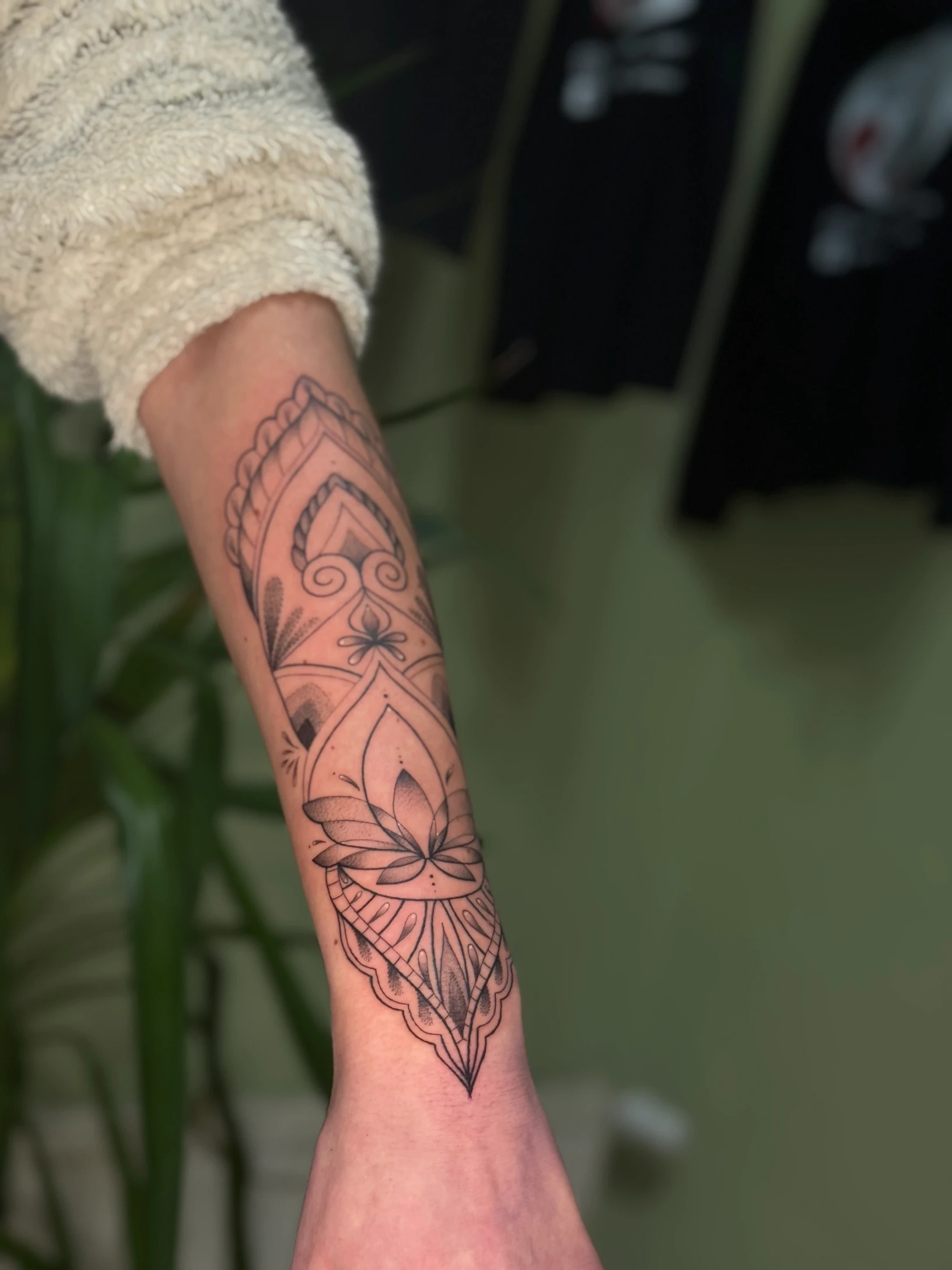
Geometric, mandala and dotwork: the differences
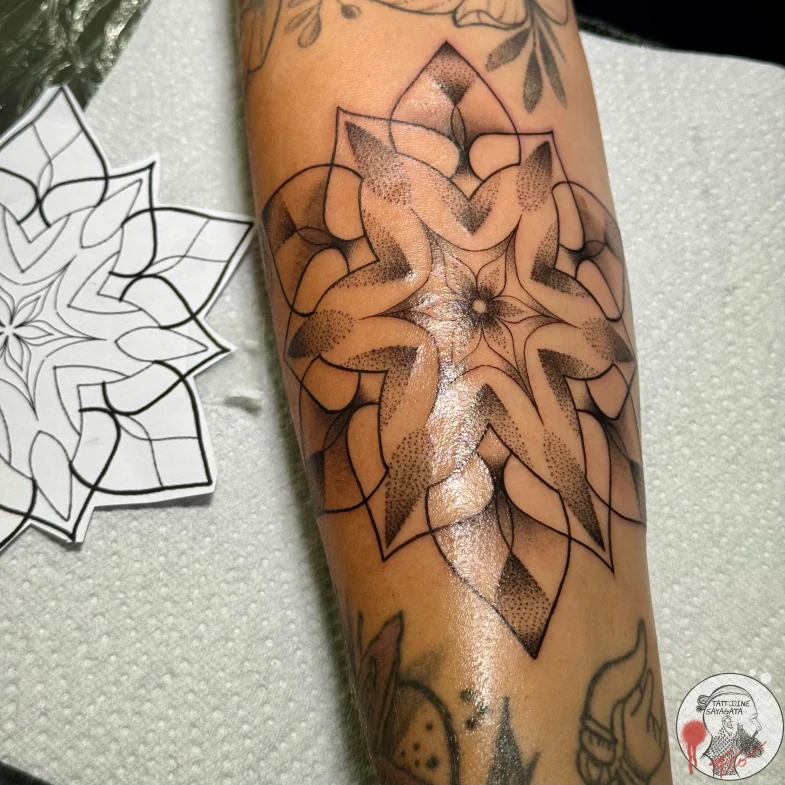
Geometric describes a structure built from lines, angles, circles or repeated shapes. A mandala arranges elements radially around a centre. Dotwork is a technique: individual dots create outlines, textures or shading. It can support flowers, animals and other illustrative elements as well as geometric designs.
These terms overlap. A mandala can have a geometric structure and dot shading; solid black areas give it a different weight from a design made entirely of lines.
Sayagata: a pattern built through connections
Sayagata uses interlocking angular lines that connect into a continuous structure. Repetition and changes of direction carry the pattern. On an arm, the grid has to respond to curvature, taper and movement: which view leads, where do lines meet, and where does the pattern stop?
A Sayagata field can stand alone or sit alongside mandalas and other geometric areas. Transitions need either a clear boundary or a deliberately developed connection. Uninked skin and changes of scale help keep the different areas distinct.
Body shape, symmetry and contrast
A symmetrical drawing looks different on moving skin depending on the angle. We check alignment on the body and discuss which view matters most. Line spacing and dot density depend on size and detail; a fixed millimetre rule cannot replace that decision.
For larger black areas, compare graphic blackwork. For lighter lines, explore fine line tattoos.
Planning a pattern that can grow
Bring references for the structure you like and explain whether the tattoo should stand alone or expand later. A border near the elbow, for example, affects how the design can connect to the upper arm. Our guide to planning a tattoo sleeve explains how larger motifs, patterns and open skin can work together.
The guides to dotwork and mandalas and the origins of Sayagata explore the differences between technique, composition and pattern.
Plan your pattern around your body
Send your preferred placement, approximate dimensions and examples of patterns you like. Photos of existing tattoos help us discuss connections and transitions.
