


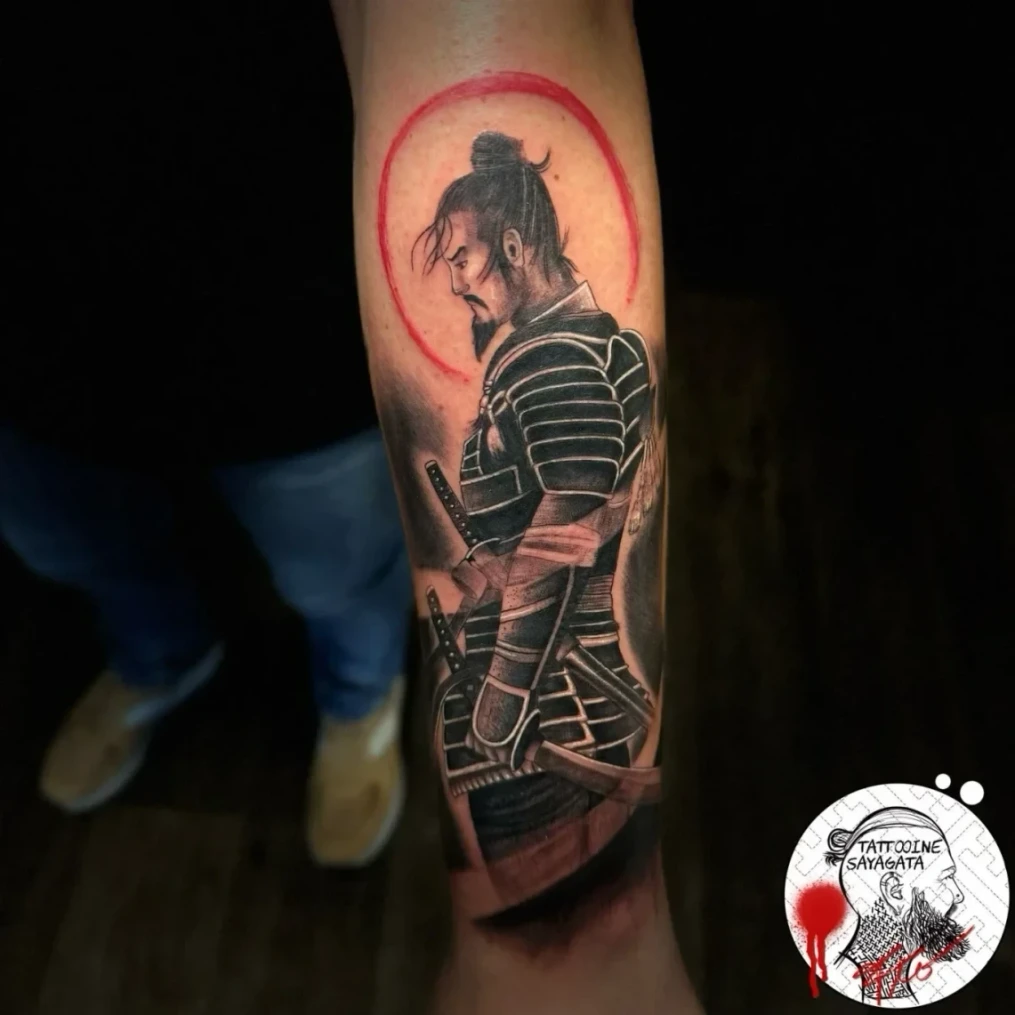
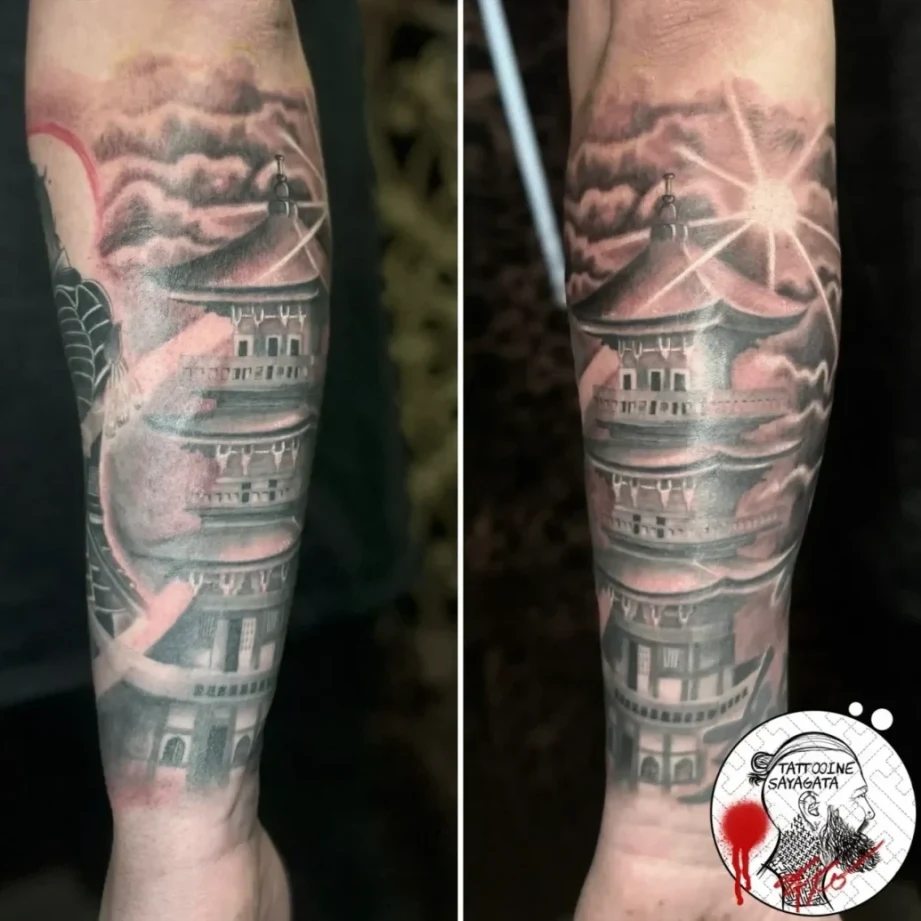
The main motif and background belong together
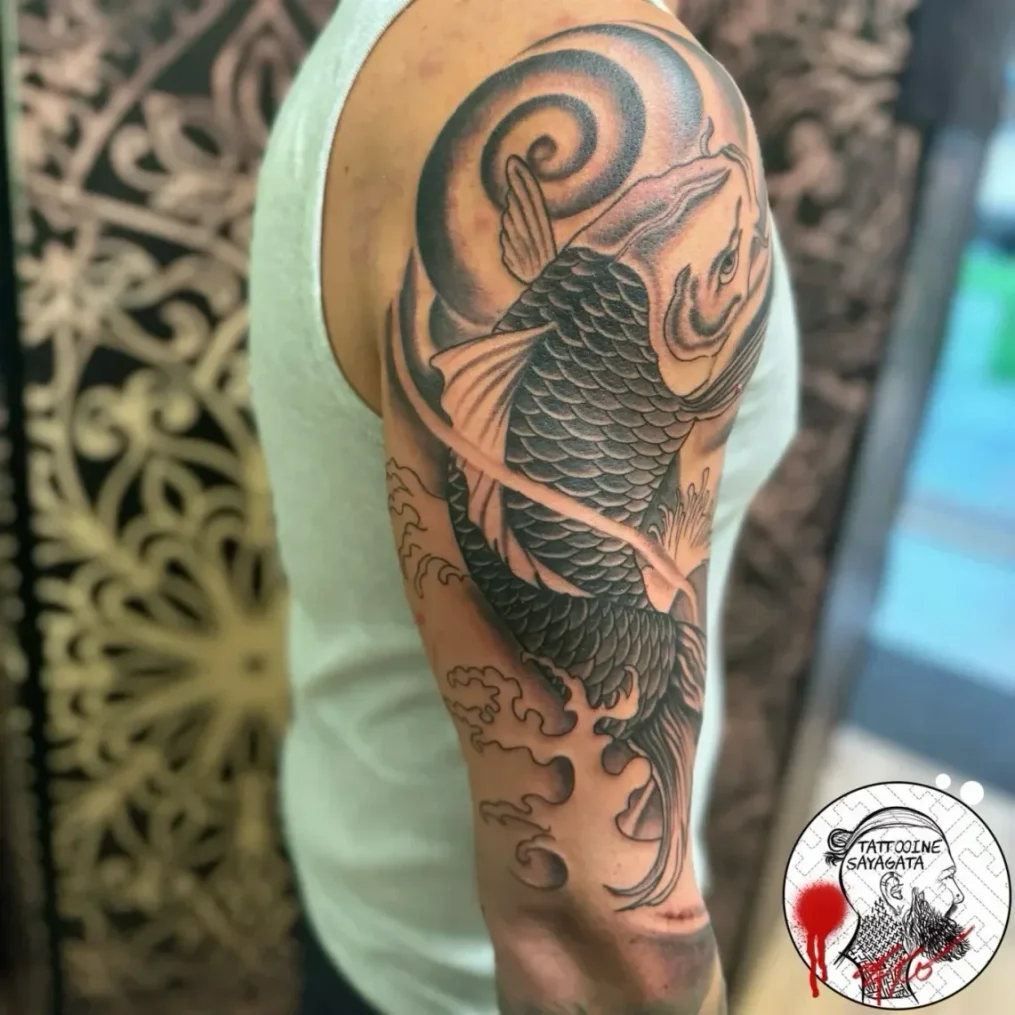
A koi or a figure needs a clear viewing angle. Waves, clouds and other supporting shapes can carry movement and connect several motifs. They should not obscure important outlines. Open skin separates layers and keeps the background from dominating every area equally.
The upper-arm design shown here responds to the body’s curvature. In the samurai tattoo, the figure is the focal point and the red circle adds another visual accent.
Traditional or Japanese-inspired?
Traditional Japanese design follows established conventions for motifs, combinations and backgrounds. Japanese-inspired work may combine these elements more freely with other approaches. Your references help clarify which direction you want. The koi, samurai and pagoda motifs show different Japanese-inspired approaches from the studio.
Symbolism also needs context. A motif or colour does not carry one universal meaning in every combination. If a particular association matters to you, bring it into the consultation.
Planning sleeves and back pieces
Large projects need early decisions on main views, boundaries and transitions. The back offers a broad connected surface; an arm must work from several angles and in motion. Our guide to planning a tattoo sleeve explains how endpoints, leading motifs and later additions work together.
Colour, grey tones and patterns
Black & grey can describe light and volume; individual colour accents change where the eye goes first. A Sayagata or geometric pattern can be added as a defined ornamental field. Its connection to the main motif needs to be clear in the design so that the grid and figures do not compete for the same space.
The detailed guide to Japanese tattoos explores motif choices, composition and the role of the background in more depth.
Your Japanese-inspired composition
Send your main motifs, preferred colours and placement. For a sleeve or back project, include photos of the entire area and information about existing tattoos.
