




Dotwork and Linework - the technical difference
Linework
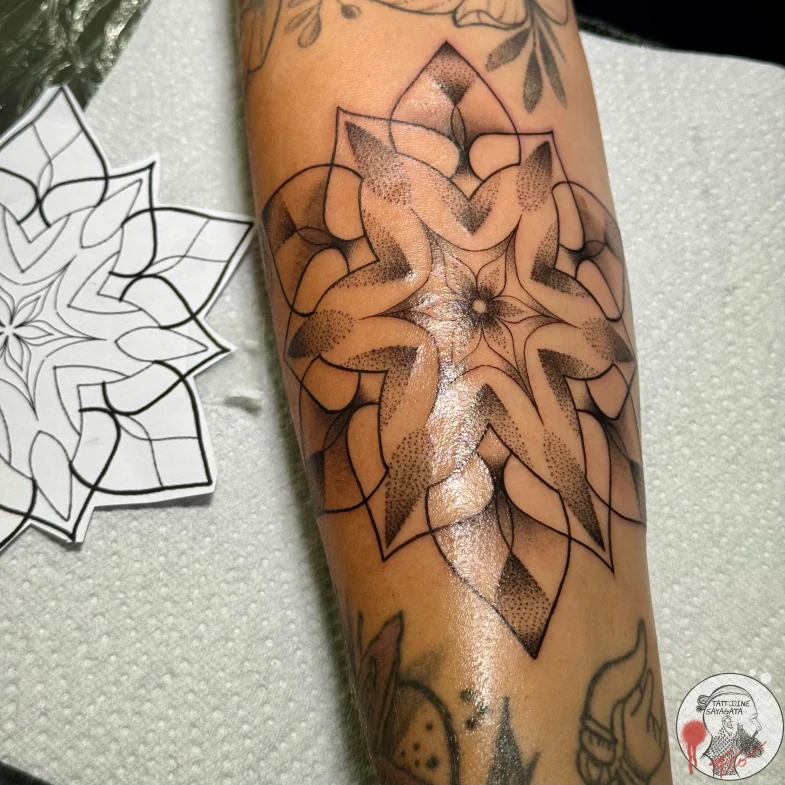
In classic linework, the design is defined by continuous lines. The effect is created by:
See studio work and planning around the body on the page about Geometric, Mandala & Dotwork.
- consistent line weight
- clear outlines
- precise transitions
Lines give the design structure and readability. Mistakes are immediately visible but can be well controlled technically. In our previous article, you can learn more about linework.
Dotwork
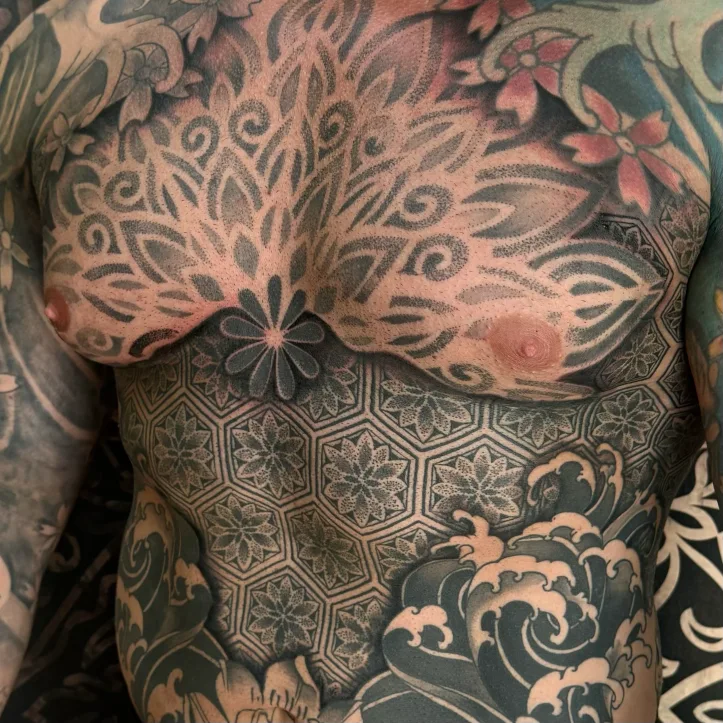
Dotwork tattoos are not made of lines but of individual dots. The density, spacing, and rhythm of the dots create:
- surfaces
- shading
- depth effect
Dotwork takes more time and requires a calm, controlled approach. The advantage: very smooth transitions and an organic effect despite geometric patterns.
Combining both techniques
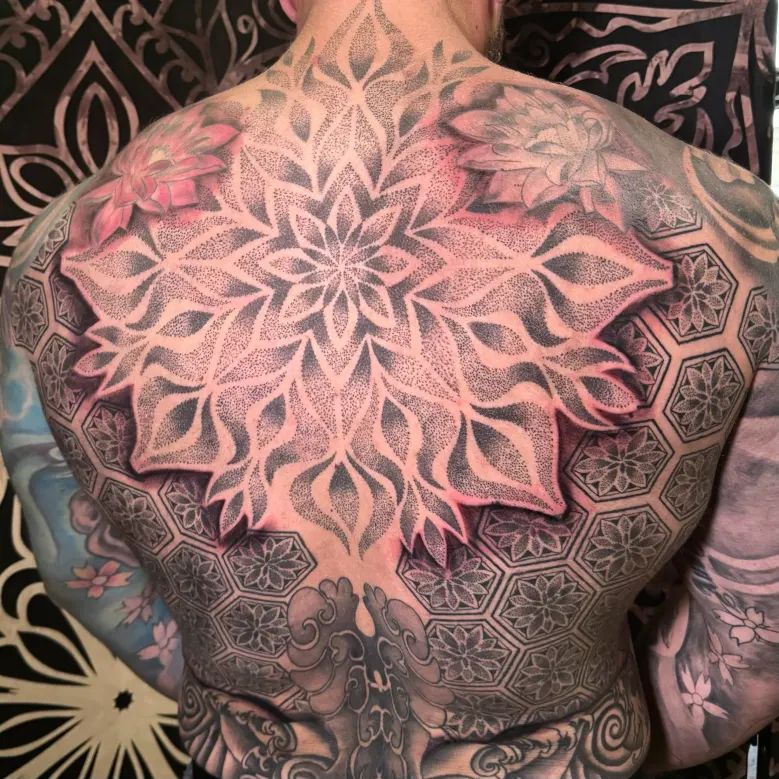
In practice, dotwork and linework are often combined. Lines define the structure, dotwork fills areas or creates contrast. This combination is especially common in mandala tattoos.
How is a mandala technically created?
Basic structure
A mandala is based on a symmetrical structure. Technically, every mandala begins with:
- a clearly defined center point
- radial guide lines
- evenly distributed segments
Without a precise preliminary drawing, a clean mandala is not feasible.
Layered construction
Mandala tattoos are built up layer by layer:
- center
- middle ornamental layers
- outer final structure
Each layer must be exactly aligned with the previous one. Even minimal deviations affect the entire design.
Dotwork in the mandala
Dotwork is used specifically to:
- visually separate areas
- create depth
- avoid harsh contrasts
Not every mandala requires dotwork - its use is planned individually.
Meaning of typical mandala and dotwork patterns
Mandala meaning
In the tattoo context, the meaning of a mandala is less about religious symbolism and more about:
- order
- balance
- repetition
Many clients in Munich choose mandalas because of their calm, structured appearance – not for any specific message.
Dotwork pattern tattoo
Dotwork patterns do not have a fixed meaning. Their effect is created through:
- rhythm
- density
- contrast
The pattern itself is design, not symbolism.
Suitable body placements for dotwork & mandala tattoos
Especially suitable
- forearm (inner or outer)
- upper arm
- shoulder
- chest
- upper back
These areas offer enough space for symmetry and clean spacing.
Less suitable
- very small body areas
- highly mobile zones
- tight joint areas
In these areas, the pattern quickly loses clarity.

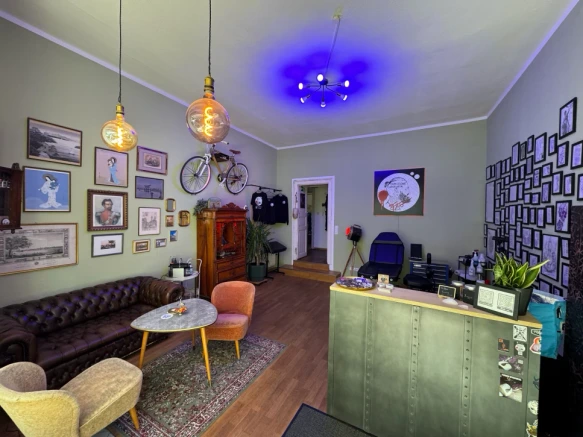
Planning and execution at Tattooine Sayagata in Munich
Why planning is essential
Dotwork and mandala tattoos do not allow for spontaneous corrections. At Tattooine Sayagata, the following is clarified in advance:
- size and placement
- line and dot spacing
- design structure and finish
Durability and aging
When properly planned, dotwork tattoos age very well. Key factors include:
- sufficient spacing
- clean dot placement
- no excessive detail density
This is where decorative design is separated from professional tattoo execution.
Conclusion
Dotwork and mandala tattoos are technically demanding styles that require precision and experience. Their effect is not created by symbolism or trends, but through structure, rhythm, and clean execution. At Tattooine Sayagata in Munich, the focus is exactly that: clear planning, calm execution, and tattoos that work long term.
