






Is there a ban on color tattoos? No.
The European requirements are based on the REACH chemicals regulation. Most restrictions on tattoo inks have applied since January 4, 2022. The transition period for Pigment Blue 15:3 and Pigment Green 7 ended on January 4, 2023. Blue, green and other color tattoos remain possible, provided current, REACH-compliant formulations are used.
The key distinction: the EU did not ban colors. It restricted substances and concentrations of substances in tattoo inks.
The term “color tattoo ban” is therefore misleading. Whether an ink may be used does not depend on its color name, but on its composition: pigments, carrier substances, preservatives and potential contaminants must comply with the statutory limits.
Two similar shades of blue may therefore be assessed differently under the law. The requirements also apply not only to color inks, but to black, grey and white inks as well.
At a glance
- There is no blanket ban on color tattoos.
- Around 4,200 substances were banned or severely restricted.
- The general REACH restrictions have applied since January 4, 2022.
- The transition period for Pigment Blue 15:3 and Pigment Green 7 ended on January 4, 2023.
What the REACH rules actually change
Regulation (EU) 2020/2081 introduced harmonized EU-wide restrictions on substances in tattoo and permanent make-up inks. They therefore also apply to tattoo studios in Germany.
According to the German Federal Institute for Risk Assessment, around 4,200 substances were banned or strictly limited. This refers to individual substances and groups of substances—not 4,200 finished inks. They mainly include:
- substances that are carcinogenic, mutagenic or toxic to reproduction,
- substances that irritate or sensitize the skin,
- certain aromatic amines, azo dyes and polycyclic aromatic hydrocarbons,
- certain metals and substances that are also banned or restricted in cosmetic products.
For many substances, very low maximum concentrations apply rather than a complete zero-tolerance ban. Manufacturers must also clearly label information including the intended use, ingredients and batch. This makes it possible to trace which product was used for a tattoo.
Why Pigment Blue 15:3 and Pigment Green 7 were restricted
Pigment Blue 15:3 (CI 74160) and Pigment Green 7 (CI 74260) were at the center of the debate. Both were widely used for vivid blue and green shades as well as mixed colors such as turquoise and violet.
They were granted an extended transition period until January 4, 2023. Since then, the limit has been 0.1 percent by weight; this means that the old formulations can effectively no longer be used with these pigments as their main colorants.
The restriction does not mean that every tattoo containing these pigments has been proven to cause illness. However, the BfR concluded that the available data were insufficient to reliably assess their long-term presence in the skin. The EU therefore decided to restrict them.
Key dates
- 2020: Regulation (EU) 2020/2081 was adopted.
- January 4, 2022: Restrictions on most of the covered substances took effect.
- January 4, 2023: The transition period for Pigment Blue 15:3 and Pigment Green 7 ended.
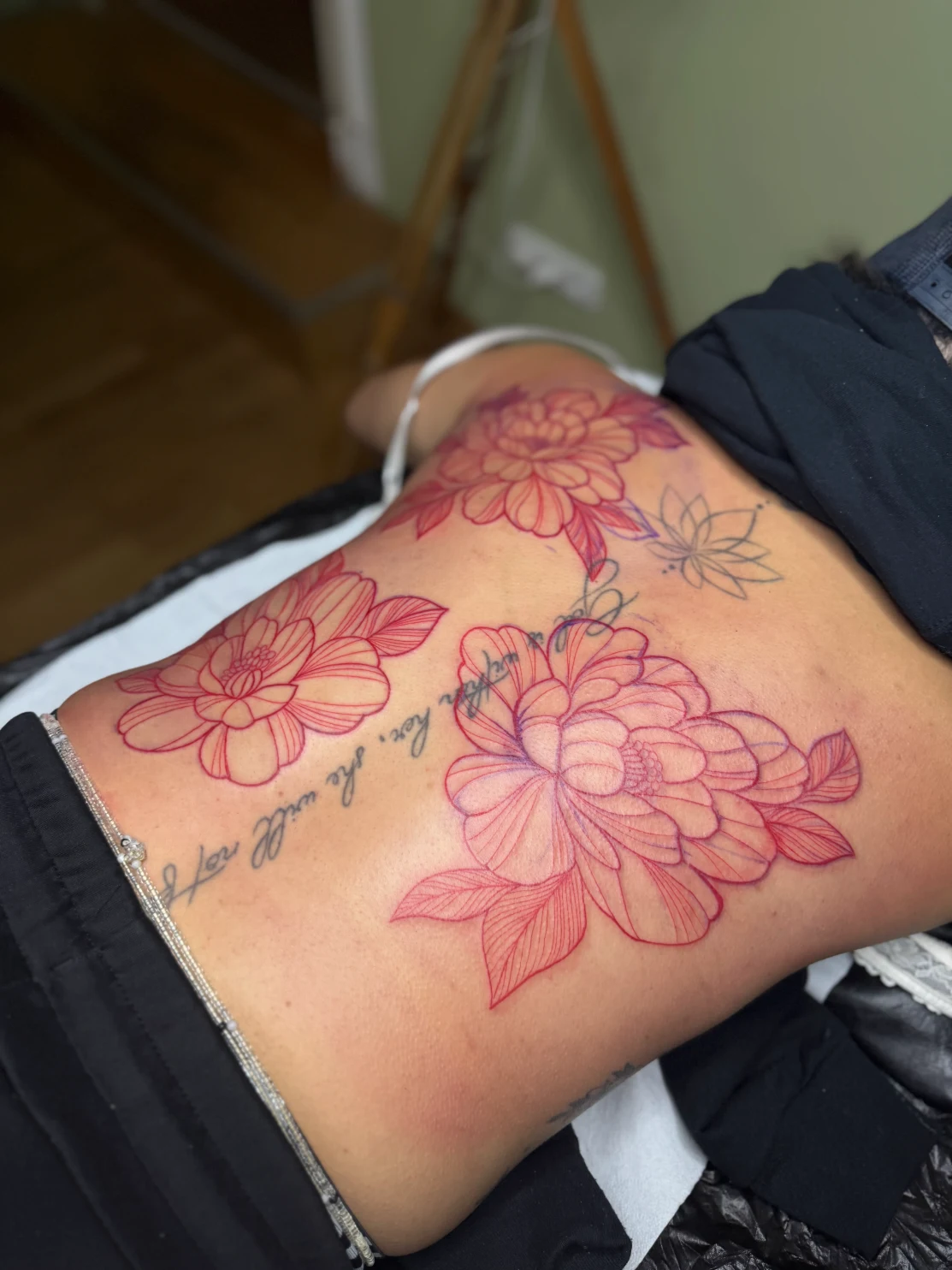

Can you still get blue and green tattoos?
Yes. Blue and green tattoos remain legal. Manufacturers have reformulated their ink systems and now offer REACH-compliant blue, green, turquoise and mixed shades.
The new formulations can differ from older inks in saturation, opacity and their appearance after healing. A good result therefore depends on the artist’s experience with the specific product line—not only on the color name printed on the bottle.
Imported tattoo inks must also comply with EU requirements. A “REACH compliant” label alone is not enough: the manufacturer, product, ingredients and batch should all be traceable.
What “REACH-compliant” means—and what it does not
“REACH-compliant” means that an ink meets the applicable substance limits and labeling requirements. This is the statutory minimum requirement, but it is not an official approval of an individual product.
Manufacturers and importers are responsible for legal compliance, while authorities carry out spot checks. There is no positive list that universally certifies individual pigments as completely safe.
Individual irritation or allergic reactions can still occur with permitted inks. Hygiene, sterile working practices, the condition of the skin and careful tattoo aftercare remain equally important.
How to recognize responsible handling of tattoo inks
As a client, you do not need to carry out a chemical analysis. However, a reputable studio should be able to explain transparently which inks it uses and where they come from.
Signs of responsible practice include:
- the inks are clearly labeled and expressly intended for tattooing or permanent make-up,
- the manufacturer, product name and batch remain traceable,
- current products from a reputable supplier are used,
- the ink is dispensed hygienically into single-use ink caps and diluted only with a suitable sterile liquid,
- allergies, previous reactions and the condition of the skin are discussed—without promises such as “guaranteed allergy-free.”
Questions about the product line being used are entirely legitimate. A professional tattoo studio in Munich should be able to explain its choice clearly.
The result also depends on how a color works with your skin tone, the chosen body placement and the motif itself. You can learn more about contrast, skin type, UV light and aging in Tattoo colors and longevity.
What the rules mean for older tattoos
The REACH rules apply to the current use and sale of tattoo inks. They do not require older tattoos to be removed.
A fully healed tattoo that is not causing any symptoms therefore does not need precautionary treatment. Tattoo removal can carry risks of its own and should be performed by appropriately qualified medical professionals.
Persistent itching, swelling, nodules, weeping areas, severe redness or pain should be medically assessed regardless of the tattoo’s age.
Only currently permitted inks may be used when touching up, extending or covering an existing tattoo. The new shade may therefore differ slightly from the older formulation.
FAQ: banned tattoo inks and REACH
Are color tattoos banned in the EU?
No. Certain ingredients are prohibited or restricted, not color tattoos as such.
Which tattoo colors are banned?
A list based on color names would be misleading. What matters is the formulation. The restrictions on Pigment Blue 15:3 and Pigment Green 7 are especially well known, but limits apply to substances across all color ranges.
Can I still get a blue or green tattoo in 2026?
Yes. REACH-compliant blue and green shades are available. What matters is that the studio uses current products with clear, traceable labeling.
Is a REACH-compliant tattoo ink automatically safe?
No. It meets the statutory minimum requirements, but this does not completely rule out individual reactions or hygiene-related risks.
Can studios still use up old bottles of ink?
Only if the product continues to meet all applicable requirements. Old stock that does not comply may no longer be used for tattooing after the transition period has ended.
Does an older tattoo containing Pigment Blue 15:3 or Pigment Green 7 need to be removed?
No. Existing tattoos do not need to be removed. However, any symptoms should be assessed by a dermatologist.
Conclusion: color tattoos remain legal
The EU has not banned color tattoos. REACH restricts certain problematic substances and has effectively ended the use of old formulations containing Pigment Blue 15:3 and Pigment Green 7 as their main colorants.
Blue, green, red and other shades remain possible. What matters is the use of current products, clear labeling, hygienic application and an artist who knows how to work confidently with the chosen color palette.
Color tattoo in Munich
Your motif. A color palette that truly fits.
Bring your motif idea and desired color direction. At Tattooine Sayagata, we will discuss which current color palette, contrasts and sizes make sense for your motif and how the concept can work on your skin.
Expert sources
- European Union: Regulation (EU) 2020/2081. Legal basis for Entry 75 of Annex XVII to REACH; substance restrictions, concentration limits and labeling.
- European Chemicals Agency (ECHA): Tattoo inks and permanent make-up. Overview of the purpose, scope, transition periods and information requirements of the European restriction.
- German Federal Institute for Risk Assessment: Questions and answers about tattoo inks. Updated technical overview dated May 6, 2025, covering the legal situation, ingredients, long-term questions and tattoo removal.
- BfR Opinion No. 039/2020 on Pigment Blue 15:3 and Pigment Green 7. Assessment of the available toxicological data and the limitations of risk assessment for intradermal use.
Scientific and legal information last updated: August 13, 2026. This article is intended for general information and does not replace medical or legal advice.
Tattoo colors and longevity: what matters long-term
How black, grey and color age, and the role contrast, skin type, UV light and aftercare play.
Read article

Tattoo aftercare: what matters after tattooing
Cleaning, cream, scabbing, sport, sun and swimming: the most important points during the healing phase.
Read article

First tattoo in Munich—what to know before your appointment
Motif, placement, size, pain, aftercare and everyday life are connected. Plan your first tattoo realistically.
Read article