


Clean, disinfected, sterile: three different things
These terms are often mixed up in everyday conversation. For a tattoo appointment, however, they describe different requirements. [1]
On narrow screens, you can scroll the table sideways.
| Term | What it means | What it means for you |
|---|---|---|
| Cleaned | Visible dirt and residue are removed. | A surface that looks clean has not necessarily been disinfected. |
| Disinfected | An appropriate process inactivates relevant pathogens; its effectiveness depends on correct application. | The product, concentration and contact time matter. Disinfected does not mean sterile. |
| Sterile | Free from viable microorganisms, including resistant bacterial spores. | Instruments that penetrate the skin must be sterile and remain protected from contamination until use. |
The studio as a whole is not a sterile room. What matters is that each material is treated appropriately for its use. A work surface needs effective cleaning and disinfection; that is not enough for a needle. [1, 2]
The workstation is prepared for your appointment
Look for a separate treatment area, easy-to-clean surfaces and a fresh covering. Personal belongings do not belong on the equipment tray. Food, drinks and pets have no place in the immediate working area. This separation prevents everyday objects from interfering with the prepared process. [3, 5]
Pay particular attention to surfaces touched during the session, such as the machine, cables and controls. Suitable protective covers reduce contamination. They are removed and replaced after each session; the necessary cleaning and disinfection are still required. Putting film over a dirty surface does not create a hygienic workstation. [6]
Correct application matters when disinfecting surfaces. A quick spray followed by immediate wiping dry is no substitute for the required wipe disinfection. The appropriate product and its instructions for use are what count. A strong smell of disinfectant, on the other hand, is not a reliable measure of quality. [2, 5]
Gloves only protect when changed correctly
Medical disposable gloves are required when tattooing. They do not replace hand disinfection. Even a gloved hand can transfer germs from one object to another. That is why it matters what the gloves touch. [2, 4]
An unprotected phone, a door handle or the artist's own face are outside the prepared working area. After these contacts, work on the fresh tattoo must not continue with the same gloves. The process needs to pause: remove the gloves, disinfect the hands hygienically, let them dry and put on fresh gloves. Damaged or soiled gloves are also changed. [3, 4]
So when your tattoo artist pauses work for a small task, this is not unnecessary effort. These interruptions help maintain the separation between the working area and its surroundings. The colour of the gloves tells you nothing about that.
With needles, the whole journey from packaging to disposal matters
Tattoo needles or needle cartridges should be sterile, single-use products. The sterile packaging must be undamaged and the stated expiry date must not have passed. Once opened, sterile parts must not be placed on a non-sterile surface or otherwise contaminated. [3, 5]
This is easiest to follow when the packaging is opened for your appointment in front of you. If the workstation has already been prepared, you can ask about it and request to see the packaging. Not having witnessed it being opened does not, by itself, prove a hygiene failure; an evasive answer without an explanation does not help you either.
Used needles go straight into a suitable puncture-resistant sharps container. Single-use material is never kept and reused for another client or for your next appointment. [2, 5]
Does every studio need its own autoclave?
An autoclave sterilises suitable instruments using steam under pressure. Whether a studio needs one depends on whether it uses reusable instruments that require this kind of reprocessing. If sterile single-use products are used exclusively for those purposes, they do not need to be reprocessed. [2]
For reusable instruments that must be used sterile, a machine in the next room is not sufficient evidence: cleaning, disinfection, a suitable validated sterilisation process and protected storage all belong together. An ultrasonic bath assists cleaning but does not replace sterilisation. The better question is therefore: which parts are used once, and how are the others reprocessed? [2, 6]
Ink and dilution are part of hygiene too
A sterile needle cannot compensate for the risks of contaminated ink. The FDA reports that microorganisms have been found even in unopened, sealed ink containers. This does not mean every ink is contaminated. It shows why a product's origin and the way it is handled matter just as much as the needle. A visual inspection cannot confirm the absence of germs. [8]
Small ink caps instead of contact with the stock bottle
The ink needed for one person is portioned into sterile, single-use ink caps. After the appointment, the caps and any remaining ink are discarded. Nothing from a used cap may go back into the stock bottle: its contents can come into contact with blood and wound fluid during tattooing. [3, 6]
The product name, manufacturer and batch should remain traceable. A batch number identifies a production run; it helps if a specific product later needs to be investigated or recalled. European labelling requirements include a batch reference and a list of ingredients. Feel free to ask which ink is being used and how you can obtain its details. [10]
Distilled water is not automatically sterile
Black ink can be diluted to create shades of grey. This requires a suitable sterile dilution solution or sterile water. Tap water and water labelled only as distilled are not equivalent substitutes: “distilled” describes a treatment process, but does not guarantee that the product is sterile when used. [7, 9]
Documented outbreaks of infections associated with tattoo inks show why this distinction matters in practice. Non-sterile liquids can introduce germs into previously suitable ink. Even with a freshly prepared mixture, what was used to make it is therefore crucial. [7]
REACH compliance concerns chemical restrictions on tattoo inks. It is not a hygiene seal for a studio's working practices or a guarantee against individual reactions. Read more about the rules in our article “Are tattoo inks banned in the EU?”. [9, 10]
Preparation starts with a conversation and the skin
Before tattooing begins, the procedure, possible risks and aftercare should be discussed. A signature does not replace this conversation. Mention known allergies, skin problems, relevant medical conditions and medication. Whether medical advice is needed must be clarified before the appointment; do not stop prescribed medication on your own. [3, 5]
If the area needs shaving, a fresh disposable razor is used. This is followed by proper skin disinfection with the specified contact time. A quick wipe or applying the stencil does not replace this step. [2, 3]
Good organisation also includes a hygiene plan: for example, it sets out who treats which surfaces and equipment, when, and with what products. You do not need to assess this plan professionally yourself. However, a specific explanation of the process is more useful for your decision than a general statement that “everything here is hygienic”. [3]
Six questions you can ask before your appointment
These questions help you move from a general impression to practices you can understand and check:
- Which needles or cartridges are used, and can I watch the sterile packaging being opened?
- Which parts are single-use products, and which are reprocessed?
- How are the machine, contact surfaces and coverings prepared between appointments?
- Which inks are used, and can the product and batch be traced afterwards?
- What is used to dilute an ink if dilution is needed?
- What written aftercare instructions will I receive, and who should I contact if problems arise?
The questions are not an exam you have to conduct. They give the studio an opportunity to explain its working methods clearly. If important points remain unresolved, clarify them before work begins. You do not have to let a treatment start while you still have doubts about the process.
Specific warning signs include reusing single-use material, using leftover ink for another person or returning directly from an unprotected phone to the fresh tattoo without changing gloves. A high price, a large portfolio and good reviews do not make those observations irrelevant.
After your appointment: aftercare instructions and warning signs
Written aftercare instructions should explain how to handle the covering used, when and how to remove it, and how to care for the tattoo afterwards. A single wear time for every kind of film would be inaccurate; the product used and the specific instructions are what matter. Our article “Proper tattoo aftercare” covers everyday life after your appointment in more detail. [6]
A fresh tattoo may initially be red and tender. Increasing or spreading redness, worsening pain, pus, or persistent unusual lumps or pustules should, however, be assessed by a doctor. If you develop a fever, chills or feel distinctly unwell, prompt medical assessment is especially important. Do not wait for a reply from the studio. [11]
Symptoms are not reliable proof of a particular hygiene failure: allergic or other skin reactions are also possible. Identifying the cause is a medical task. Product and batch information can be helpful. [8, 9]
Frequently asked questions about tattoo studio hygiene
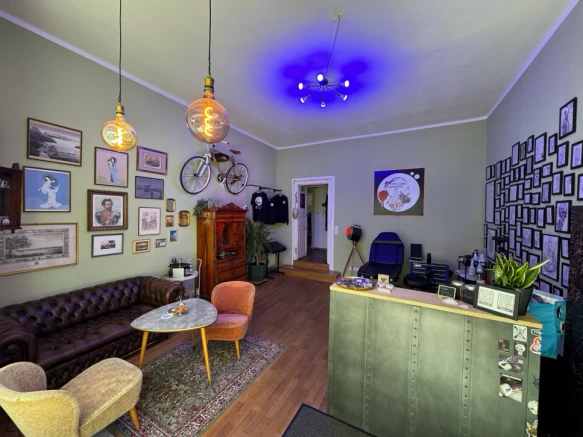
Can I tell from photos whether a studio works hygienically?
Only to a limited extent. Photos show a small part of the picture at one moment in time. Glove changes, material storage and preparation between clients are difficult to assess from them. Use photos for a first impression, then discuss the actual procedures.
Who inspects tattoo studios in Munich?
Munich's Health Department carries out inspections of infection-control hygiene. According to the department, these are triggered by specific circumstances, especially complaints. This does not mean every studio is regularly inspected or officially certified as risk-free. [12]
What applies to a small tattoo or a touch-up?
The skin is injured in these cases too. The basic requirements for sterile materials, hand hygiene and a prepared workstation apply regardless of how small the design is or how short the appointment may be. [2]
Can a professional studio rule out every complication?
No. Consistent hygiene reduces infection risks. It does not completely rule out allergic reactions or other complications. A trustworthy approach explains these limits clearly rather than promising a completely risk-free tattoo. [9]
Prepare thoughtfully for your tattoo appointment in Munich
Planning a tattoo at Tattooine Sayagata? Alongside your design idea, bring any questions you have about the process, materials or aftercare. In a conversation with Flo, you can discuss the design, placement and size, and raise any unresolved points before your tattoo session.
The studio is at Einsteinstraße 179, 81677 Munich. Consultations and tattoo sessions are by appointment. If you are planning your first visit, our guide “First tattoo in Munich” can also help.
Sources
- CDC: Introduction, Methods, Definition of Terms
- Bayern.Recht: Bavarian Hygiene Regulation (BayHygV), especially sections 2–4 (German)
- Bavarian LGL: Tattoo and piercing studios — hygiene guidance for operators, October 2025 (German)
- Robert Koch Institute: Medical disposable and protective gloves — indications and disinfection (German)
- Munich Health Department: Tattooing checklist (German)
- CIEH / Public Health England and partners: Tattooing and body piercing guidance toolkit
- CDC: Tattoo-Associated Nontuberculous Mycobacterial Skin Infections — Multiple States, 2011–2012
- FDA: Think Before You Ink: Tattoo Safety
- German Federal Institute for Risk Assessment: Questions and answers about tattoo inks (German)
- European Union: Regulation (EU) 2020/2081 (German text)
- American Academy of Dermatology: Tattoos: 7 unexpected skin reactions and what to do about them
- City of Munich: Hygiene inspections in health and personal care services (German)